The Future of Space Tourism in 2026: How Commercial Space Travel Is Becoming Reality
🚀 Explore reusable rockets, suborbital flights, space hotels, costs, and the new era of civilian space travel.
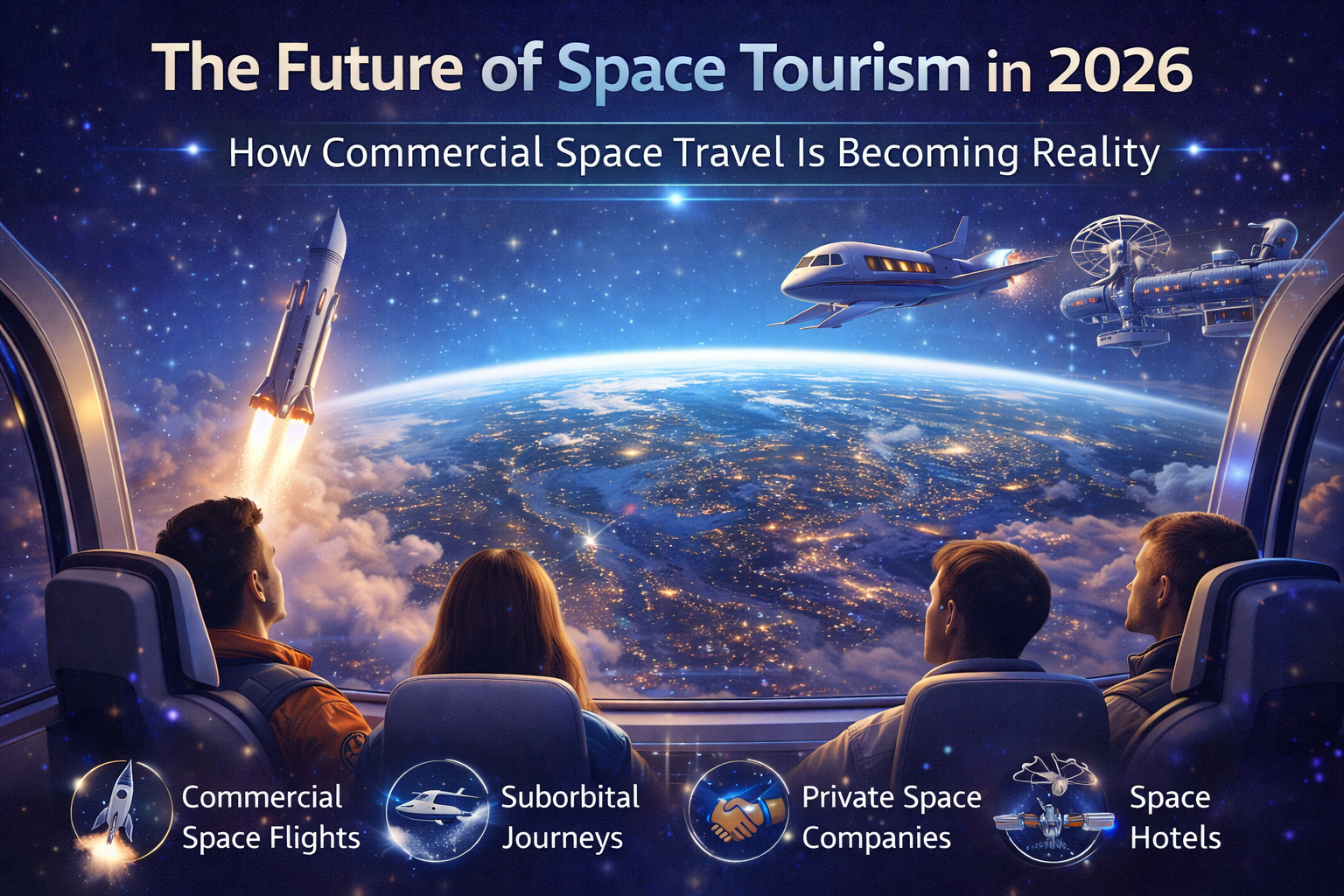
Space travel was once limited to government astronauts and national space agencies. In 2026, however, commercial space tourism is rapidly transforming that reality. Private companies are launching civilian passengers into suborbital and orbital flights. While still expensive, the industry is expanding and becoming more technologically advanced each year. The future of space tourism is no longer science fiction — it is becoming a real commercial sector with growing demand.
What Is Space Tourism?
Space tourism refers to commercial space travel for recreational purposes. Unlike traditional astronaut missions, space tourists pay for tickets, receive short training, experience microgravity, and view Earth from space. Flights may be suborbital (brief trips to the edge of space) or orbital (longer stays in space).
Why Space Tourism Is Growing in 2026
Several key factors are driving this growth: advancements in reusable rocket technology, private investment in aerospace, growing interest from wealthy individuals, improved safety systems, and media exposure and public fascination. The commercialization of space is accelerating innovation.
Major Developments in Space Tourism
1. Reusable Rockets
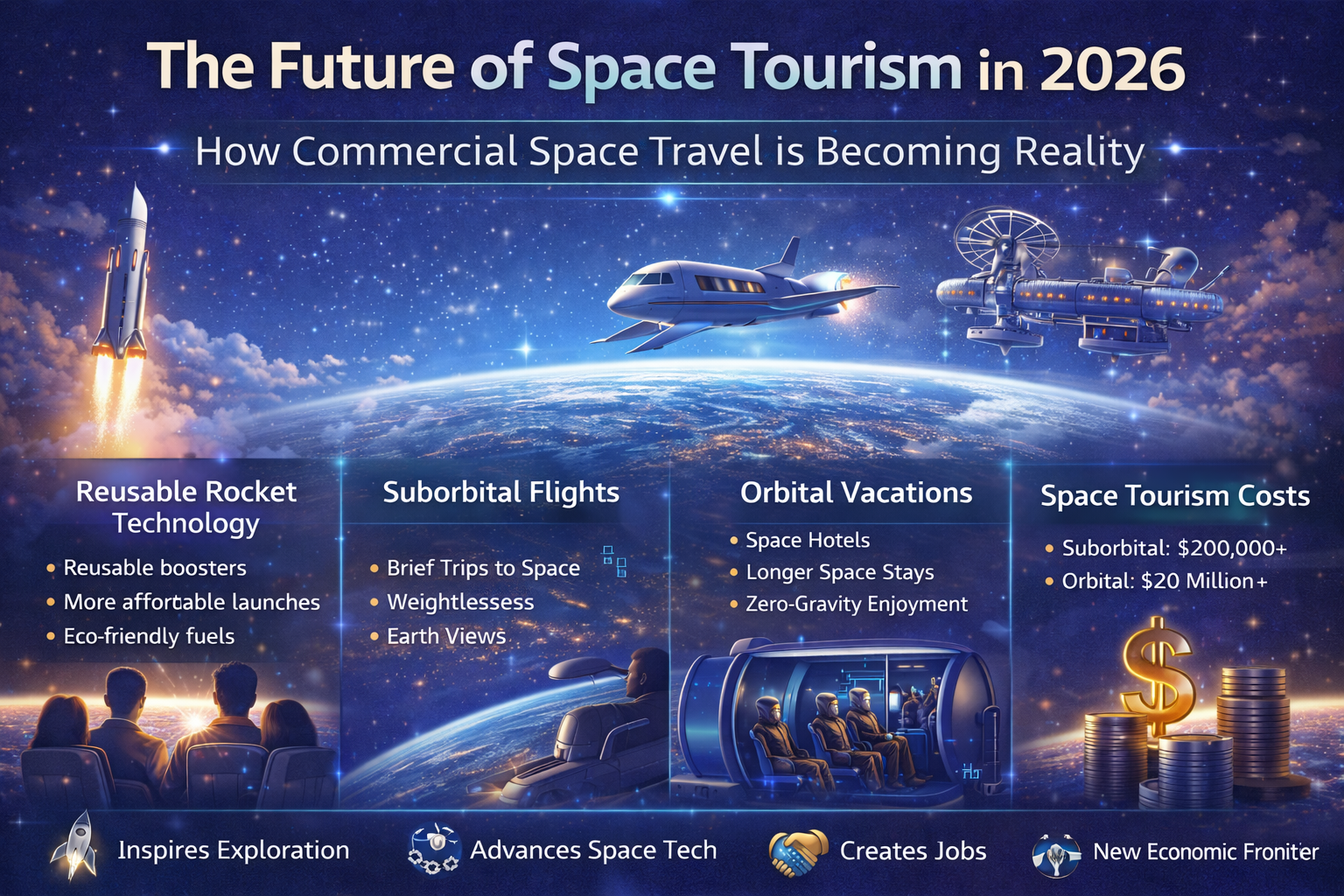
Reusable launch systems reduce costs dramatically. Lower launch costs mean more frequent flights, reduced environmental impact, and long-term affordability.
2. Suborbital Passenger Flights
Suborbital trips last about 10–15 minutes, provide weightlessness, and offer panoramic Earth views. These flights are the entry-level space tourism experience.
3. Space Hotels (Future Concept)
Companies are planning orbital hotels, space stations for civilians, and luxury zero-gravity experiences. While still in development, the concept is gaining attention.
4. Safety Improvements
Modern spacecraft include advanced navigation systems, emergency escape mechanisms, and automated landing systems. Passenger safety remains a top priority.
Cost of Space Tourism in 2026
Currently, space travel remains expensive. Average estimates: suborbital flight costs hundreds of thousands of dollars, orbital missions millions of dollars. However, experts predict costs will gradually decline.
Training for Space Tourists
Before launch, passengers undergo physical health checks, safety training, zero-gravity simulations, and emergency procedures. Preparation is shorter compared to astronaut training.
Environmental Concerns
Critics highlight carbon emissions from launches, resource usage, and space debris risks. Companies are investing in sustainable rocket fuel alternatives.
Economic Impact of Space Tourism
The industry contributes to aerospace job creation, technology innovation, scientific research funding, and tourism sector expansion. Commercial space travel may create new economic ecosystems.
The Future of Space Tourism by 2030
Experts predict increased competition among private companies, reduced ticket prices, orbital tourism packages, and advanced space experiences. Space tourism may become more accessible to upper-middle-class travelers in the next decade.
Benefits of Commercial Space Travel
Inspires scientific curiosity, encourages STEM innovation, expands commercial aerospace industry, and creates new career opportunities. It represents a new chapter in human exploration.
Challenges Facing the Industry
Despite progress, challenges include high development costs, regulatory approvals, public safety concerns, and environmental criticism. Long-term sustainability is essential.
✅ Quick Recap: Space Tourism in 2026
- Reusable rockets lowering costs
- Suborbital flights offering brief space experiences
- Space hotels in development
- Safety systems improving rapidly
- Costs expected to decline over time
Explore aerospace and tech skills: Skills | Courses | Career tips
Frequently Asked Questions
* Always review Privacy Policy and Disclaimer before applying.